
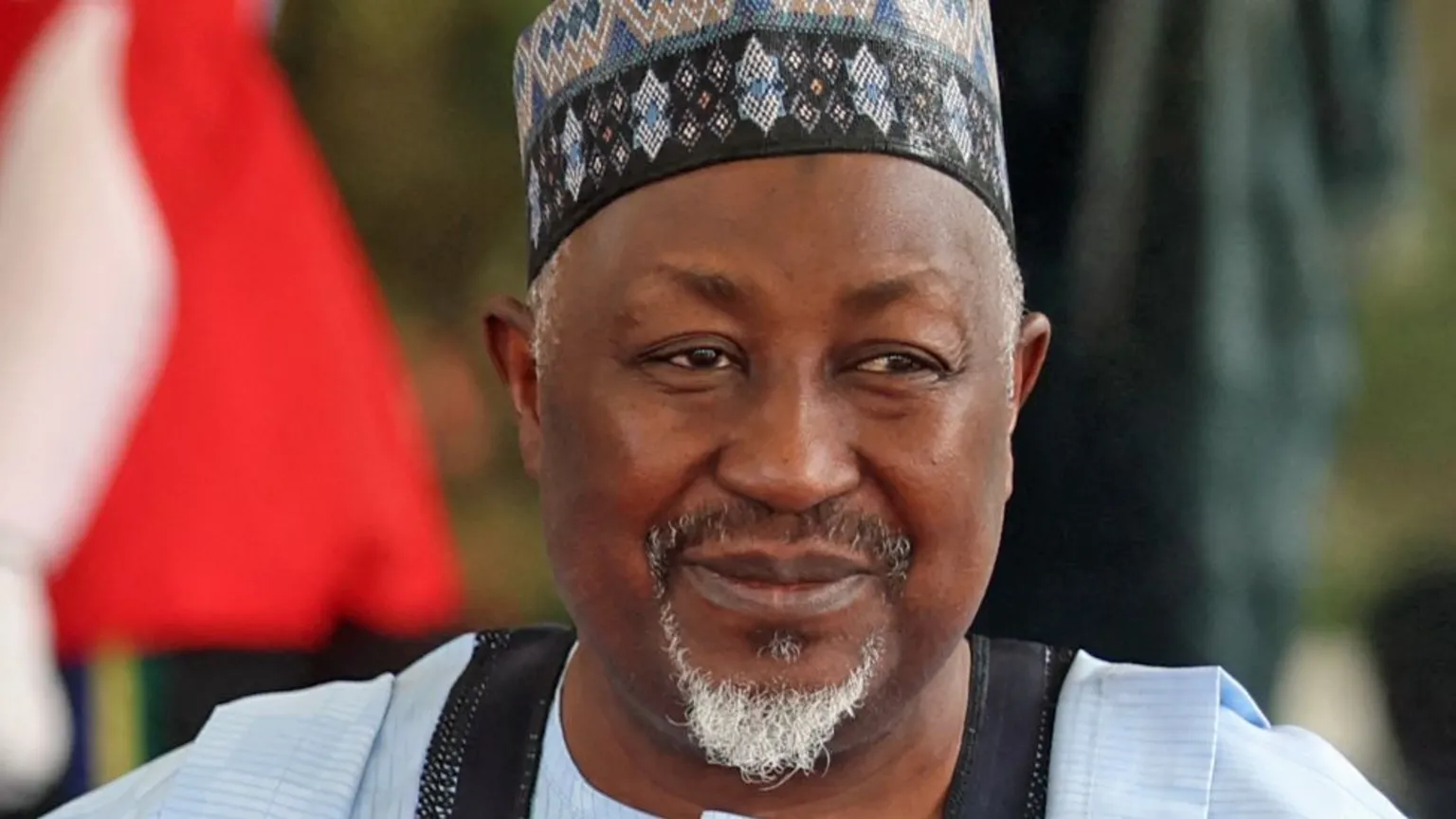
Nigeria's defence minister resigns.
The 63-year-old's resignation arrives at a critical juncture for Nigeria, as the nation grapples with escalating security challenges. The government is currently under immense pressure to tackle a disturbing wave of mass kidnappings across the country. Just last week, the office of the UN High Commissioner for Human Rights reported a grim statistic: over 400 people, a majority of whom were schoolchildren, have been abducted since mid-November.
In response to Abubakar's departure, President Bola Tinubu has nominated retired General Christopher Musa to take over the crucial post. General Musa, 58, brings a wealth of experience to the table, having previously served as Nigeria's chief of defence staff from June 2023 to October 2025. He is widely recognized as one of the nation's top military strategists, particularly acclaimed for successfully leading significant counter-insurgency efforts against jihadist factions in Nigeria's northeastern region.
Further highlighting the pervasive insecurity, recent events saw gunmen kidnap at least 20 individuals, including a Christian pastor, a Muslim bride, and her bridesmaids, during two separate attacks in the north on Sunday. Adding to the concern, approximately 250 schoolchildren and 12 teachers from a Catholic school in central Niger state are still unaccounted for, following what has been the largest mass kidnapping incident in recent weeks. While the exact perpetrators of these kidnappings remain elusive – many analysts suspect criminal gangs are behind them, primarily seeking ransom – a presidential spokesman recently told the BBC that the government believes jihadist groups are responsible.
Abubakar took on the defence minister role in August 2023, and the specific health concerns leading to his resignation have not been disclosed. He formally conveyed his decision to President Bola Tinubu through a letter. President Tinubu's office confirmed that the president accepted Abubakar's resignation and extended his gratitude for his "services to the nation." Furthermore, the office highlighted that President Tinubu has declared a national security emergency, outlining plans to significantly boost the police force to approximately 50,000 officers by recruiting an additional 20,000.
Nigeria is currently grappling with a multifaceted array of security challenges. These include criminal gangs orchestrating kidnappings for ransom, an ongoing Islamist insurgency in the northeast, separatist movements causing unrest in the southeast, and a persistent conflict between herders and farmers in the central region over vital land and water resources. According to experts, the efforts to resolve these various crises have been hindered by issues like corruption, inadequate intelligence sharing, and underfunded local police forces.
Prior to his ministerial role, Abubakar served two terms as the governor of Jigawa, a northern state, from 2015 to 2023. He played a pivotal role in President Tinubu’s presidential election campaigns just over two years ago, notably helping him secure victory in his home state of Jigawa. His contributions were recognized with the defence portfolio upon Tinubu's assumption of office. Nigeria's Senate is expected to commence confirmation hearings for General Musa shortly. Should he be approved, he will be tasked with overseeing what could be Nigeria's most ambitious security reforms in decades.
On another front, the US House Committee on Appropriations is scheduled to host a high-level roundtable meeting later on Tuesday. The aim is to delve into allegations of Christian persecution in Nigeria, a topic drawing increasing international concern amid the country's escalating violence. "We will never turn a blind eye to our brothers and sisters in Christ who suffer for their faith," stated Tom Cole, chairman of the House Appropriations Committee, in a post on X (formerly Twitter). Earlier in November, former US President Donald Trump even threatened military intervention in Nigeria if the government didn't put an end to "the killing of Christians." However, both the Nigerian government and security analysts have consistently emphasized that victims of these attacks include both Muslims and Christians. In a move to foster international cooperation, Nigeria's National Security Adviser Mallam Nuhu Ribadu led a delegation to Washington last week. During these talks, an agreement was reached to establish a joint US-Nigerian working group dedicated to enhancing defence and security collaboration.